
Frost Valley™: Merge & Story
Tuyoo Games (HK) LimitedCasual
4.8691.00 Reviews
- Version
- 1.14.12
- Installs
- 10.00M
- Age Rating
- Teen
Screenshots
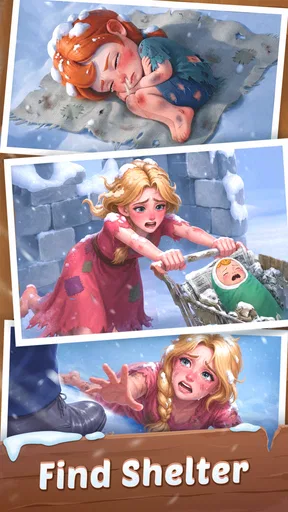

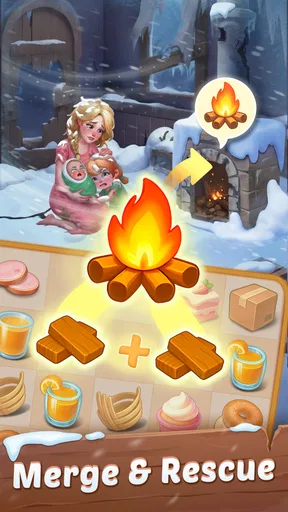
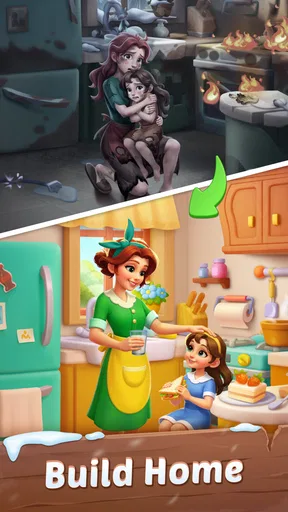
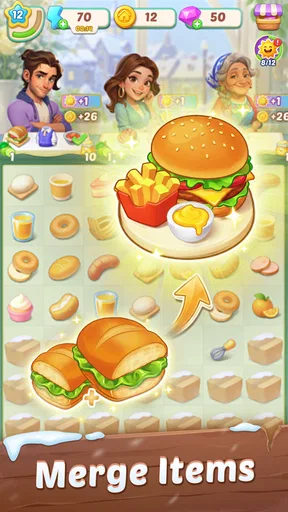
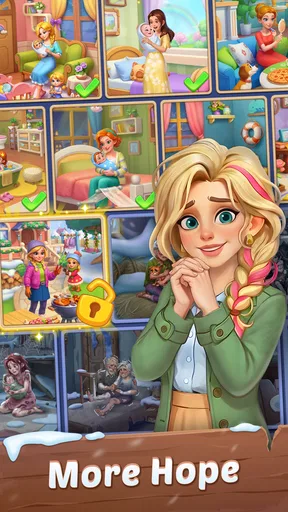

Our Review of Frost Valley™: Merge & Story
 Analysis by Appyee
Frost Valley™: Merge & Story is a casual mobile game built around a gentle, narrative-focused merging experience. I found its strongest appeal in the way it asks me to make small, understandable decisions rather than react at high speed. The setting gives those decisions a sense of purpose, while the story keeps the board from feeling like an endless collection of identical tasks. If you enjoy relaxing puzzle games with a little more context than simple tile matching, this is an easy one to consider.
It is free to download, with optional in-app purchases ranging from $0.99 to $99.99 per item. The game is made by LITEORANGE CREATION PTE. LTD., carries a Teen content rating, and currently lists version 1.7.10 for devices running Android 7.0 or later. Its average score sits at 4.8 from around 92 thousand ratings, and it has passed 5 million installs. Those figures suggest a large audience, but I still think the more important question is whether its pace, presentation, and progression suit the way you want to play.
Readable goals and a navigation style that favors calm play
The first thing I noticed is that the merge format is naturally easy to understand: combine matching items, create something more useful, and use the result to move the surrounding situation forward. Frost Valley™: Merge & Story benefits from that familiar structure because I never felt forced to learn a complicated control scheme before getting into the actual experience.
That simplicity matters for players who prefer clear visual organization. A merge board can become confusing when too many objects compete for attention, especially on a smaller phone. Here, the most comfortable approach is to pause before making a move and identify which items are immediately useful and which should be saved. I recommend resisting the urge to merge everything as soon as possible. Leaving a few related objects together can preserve options and prevent the board from becoming awkwardly crowded.
The story layer also helps navigation because it gives the activity a broader reason to exist. Instead of treating every merge as an isolated action, I tend to view it as part of restoring or developing the valley. That framing is useful for players who lose interest in abstract puzzle boards. It creates a gentle rhythm: inspect the available items, make a choice, check the next objective, and decide whether another short session is worthwhile.
For someone who has difficulty remembering complex menus, the casual structure is a positive. The game does not depend on a long chain of controls or rapid switching between unrelated systems. I can usually return after a break and understand what I was doing by looking at the board and the current story direction. That makes it more approachable than some strategy games that punish a player for forgetting a detailed setup.
Still, readable does not always mean effortless. Merge games rely heavily on visual distinction between objects, and a busy board can demand close attention. Players with reduced vision may find that small items or subtle differences take more effort to identify. I would use the largest comfortable screen available and avoid playing with the display dimmed too far. A tablet may be preferable to a compact phone for anyone who finds dense boards tiring.
Why the story changes the way I play
The narrative focus is not just decoration in my experience. It changes the emotional tone of the merging loop. A purely score-driven puzzle encourages me to chase efficiency, while Frost Valley gives me a reason to care about the next piece of progress. That makes it a better fit for players who like light storytelling but do not want a demanding role-playing game.
I also appreciate that the story provides natural stopping points. When I have only a few minutes, I can make a couple of useful merges and put the game down without feeling that I have missed a fast-moving competitive event. On a longer break, I can spend more time organizing the board and thinking through the best sequence. This flexibility is one of the game’s most practical strengths.
There is a trade-off, though. Anyone looking for deep character development, complex branching choices, or a highly strategic campaign may find the story more of a supportive layer than the main attraction. I would choose a dedicated adventure game instead if narrative decisions are my priority. Frost Valley works best when the story and the puzzle loop share the spotlight.
Motor, sensory, and attention demands in everyday play
From a motor perspective, the game appears suited to players who prefer tapping and dragging over rapid, repeated actions. The merge format does not ask me to perform a long sequence of precise movements in a short window. That makes it more comfortable than action-oriented casual games for people who find fast swipes or constant reactions tiring.
Even so, dragging small objects can become uncomfortable for players with limited dexterity, hand tremors, or joint pain. My practical advice is to use deliberate movements rather than trying to play quickly. The game’s relaxed pace supports that approach. If a move feels difficult, taking a moment to reposition the finger and use a shorter path can be less frustrating than attempting several hurried gestures.
The board also rewards planning, which can reduce unnecessary physical input. Instead of moving every object repeatedly, I first scan for combinations that open space or support the current objective. This is one of the more useful habits I developed while playing: plan the next two merges before making the first one. It saves taps, reduces board clutter, and makes the experience less demanding for anyone who tires easily.
Sensory comfort is more complicated because casual games often use visual effects, changing scenes, and feedback animations to make progress feel rewarding. I found that these elements can be pleasant during a short session but more noticeable during extended play, particularly for someone sensitive to motion, contrast, or repeated visual activity. I would keep sessions brief if the screen begins to feel overwhelming and use the device’s own display settings to make the overall presentation more comfortable.
Sound is another factor worth considering. I often play this kind of game with audio lowered or muted, especially in public places or when I am trying to concentrate. That can make it easier to control the sensory environment, although it may reduce some of the atmosphere. Players who depend on audio cues should not assume that sound is the only way to understand progress; the board and story presentation remain the main sources of information in my play.
Attention, memory, and decision fatigue
Frost Valley is less demanding than a real-time game, but it is not completely passive. The board can invite several possible merges at once, and choosing the wrong one may leave fewer useful spaces later. For players with attention difficulties, this can be both a benefit and a challenge. The limited pace gives time to think, yet the number of visible possibilities can still create decision fatigue.
I found it helpful to use a simple priority order: first look for a move that directly supports the current task, then consider a move that creates open space, and only after that make a merge that is merely convenient. This approach keeps the board connected to the story rather than turning every move into an impulse decision. It also makes short sessions feel more manageable.
Players who prefer completely predictable puzzles may be less comfortable with the resource-management side of merging. The best move is not always the most obvious matching pair. Saving an item can be valuable, but holding too much can also make the board feel cramped. That tension is part of the appeal, although it means the game is not ideal for someone who wants a purely automatic, low-thought activity.
Situational access: where the game fits well
This is a strong choice for quiet, interrupted play. I can imagine using it during a commute, while waiting for an appointment, or at the end of the day when I want something more engaging than scrolling but less demanding than a competitive game. Because the progress loop is based on individual actions rather than fast matches, I do not feel pressured to remain constantly alert.
It also suits players who like to share a device casually with family members, although the Teen rating means adults should decide whether the tone and story are appropriate for younger players. The game’s basic concept is easy to explain, so a new player can understand the central action quickly. The deeper decisions come later, as the board becomes more crowded and the value of timing becomes clearer.
For commuters or people who play in noisy environments, the visual nature of the game is convenient. I can follow the board without needing to hear every piece of feedback. On the other hand, a bright, detailed screen may be a poor match for someone trying to minimize visual stimulation in a dark room. In that situation, a simple text-based game or an audio-focused experience could be more comfortable.
The game is also a reasonable option for players who want a free starting point. I can try the core experience without paying at the beginning, then decide whether optional purchases are worthwhile. That is preferable to committing to a paid download before knowing whether the merge-and-story format suits me. However, anyone who is particularly sensitive to purchase prompts should pay attention to the way they affect the rhythm of play and set a personal spending limit before beginning.
Those optional purchases create an important access consideration. The game can be entered for free, but a player’s experience with progression may feel different depending on whether they are willing to spend. I would not recommend buying anything simply to solve a moment of impatience. Waiting, returning later, and using a more deliberate board strategy are better first responses when progress slows.
A realistic short-session routine
My most comfortable routine is to open the game with one clear purpose rather than trying to complete everything visible. I check the current story task, identify the items linked to it, and make only the merges that help that objective. If the board begins to fill, I prioritize space and stop before the session becomes mentally tiring.
That routine works well during a ten-minute wait because it avoids the feeling that I need to finish an entire chapter or clear the board. It is also kinder to players who have limited energy or concentration. The important point is to treat the game as a sequence of small decisions, not as a test of endurance. The valley setting encourages that slower approach, and I think it is where the game feels most distinctive.
For a longer evening session, I would change the routine slightly. I would organize the board before chasing new combinations, keep related objects grouped when possible, and avoid spending resources just because an option is immediately available. This reduces the chance of creating a messy board that demands more attention than I want to give it.
Remaining barriers and who should choose something else
The biggest barrier is the visual dependence of the merge board. Players with low vision, color-vision differences, or difficulty distinguishing small shapes may need more effort than the average player. I would not describe the game as universally accessible simply because its controls are simple. Simplicity of interaction and clarity of presentation are different things.
Another limitation is the possibility of cognitive overload when several goals and objects compete for attention. The game is calmer than a reflex-based title, but calm does not mean empty. Players who need very direct instructions may prefer a puzzle with one clearly defined task at a time. Frost Valley is more rewarding for someone willing to inspect, compare, and occasionally accept that a less obvious move is better.
The Teen rating is also relevant when choosing the game for a shared household. Adults looking for a gentle experience for children should check whether the content and presentation fit their family before handing over the device. I would not treat the casual label as a guarantee that every player will find it suitable.
There is also a motivational barrier for players who dislike waiting or resource-based progression. If I want immediate access to every tool, constant challenge, or a clean win-or-lose structure, this is not the right format. A traditional match-three game may feel more satisfying because each round has a clearer finish. A fast arcade game is a better choice for reflexes, and a story adventure is better for players who want dialogue and exploration to dominate.
Finally, the free-to-play structure requires self-control. The purchase range stretches from small optional items to much larger individual purchases, so I would approach the shop carefully. The most sensible way to play is to decide in advance whether I am comfortable spending at all, rather than allowing a difficult board or a moment of impatience to make that decision for me.
My inclusive verdict on Frost Valley
I recommend Frost Valley™: Merge & Story to players who want a visually guided, story-supported casual game that can be played in short bursts. Its relaxed interaction style is a genuine advantage for people who do not enjoy rapid gestures, and its flexible session length makes it practical for everyday situations. The merge board gives enough room for planning without turning the game into a demanding strategy simulation.
Its strongest inclusive quality is the ability to slow down. I can inspect the board, change my mind, and choose a smaller goal without being pushed into a timed reaction. That makes the experience friendlier to different energy levels and playing environments. The most useful adjustment is to play deliberately: group related items, protect open space, and connect each merge to the current story objective.
It is not a perfect fit for every player. Small visual details, crowded boards, optional spending, and the Teen rating may create obstacles depending on the person and the setting. Players who need strong accessibility controls, minimal visual complexity, or entirely predictable progression should compare it with simpler puzzle games before settling in.
For me, the balance is convincing. Frost Valley turns familiar merging into a softer, more purposeful routine, and the valley setting gives short sessions a sense of continuity. I would start with the free version, play without rushing toward purchases, and judge the game by how comfortable the board feels after several sessions. If you enjoy quiet decision-making and light storytelling, it is a thoughtful casual game worth trying.
Privacy and Permissions
See what permissions an app requests and how it handles your data.
- Wi-Fi connection information
- view Wi-Fi connections
- Other
- view network connections, full network access, control vibration, prevent device from sleeping, Google Play license check
Verdict
Strengths of Frost Valley™: Merge & Story
- Relaxing merge gameplay suited to short, casual sessions.
- Story progression gives purpose beyond completing merge chains.
- Colorful valley setting and polished visual presentation.
- Frequent tasks provide clear goals and a steady sense of progress.
- Easy-to-learn controls make it accessible for new merge-game players.
Limitations of Frost Valley™: Merge & Story
- Energy limits can interrupt play during longer sessions.
- Some upgrades and progress may require considerable resource grinding.
- Later merge chains can make the board feel crowded and harder to manage.
- The story may progress slowly for players focused mainly on gameplay.
- Optional purchases can make resource shortages easier to overcome.
Similar Picks in This Category
View All
My Talking Angela
Outfit7 Limited4.2

My Talking Tom
Outfit7 Limited4.3

Pou
Zakeh4.2

My Talking Tom 2: Pet Game
Outfit7 Limited4.3

Candy Crush Saga
King4.6

Bridge Race
Supersonic Studios LTD4.1
Frequently Asked Questions
What is Frost Valley™: Merge & Story about?
Frost Valley™: Merge & Story is a casual merge game that combines resource management, renovation, and narrative elements. You merge matching items to create more useful objects, complete tasks, and help rebuild a frozen settlement. As you progress, the game gradually reveals character stories, new areas, and additional crafting objectives, making it suitable for players who enjoy relaxed puzzle gameplay with a light adventure storyline.
How does the merging gameplay work in Frost Valley™: Merge & Story?
The main gameplay involves combining two or more identical objects to produce an upgraded item. These items can be used to fulfill orders, restore locations, unlock parts of the valley, and advance the story. The board has limited space, so planning is important. Players need to decide which objects to merge immediately and which ones to keep for future missions, rather than combining everything without a strategy.
Can Frost Valley™: Merge & Story be played offline?
Some basic elements may be available without a continuous internet connection, but the game can require online access for certain features, including synchronization, advertisements, updates, events, or purchases. Offline availability may also vary by device and game version. If you plan to play while traveling, it is best to launch the game while connected first and check which features remain accessible after disconnecting.
Does Frost Valley™: Merge & Story include in-app purchases or advertisements?
Yes, Frost Valley™: Merge & Story may include optional in-app purchases and advertising-supported rewards. Purchases can typically provide premium currency, energy, boosters, or other resources that help shorten waiting periods and speed up progress. Advertisements may offer extra benefits when you choose to watch them. The game can generally be enjoyed without paying, although free players may need more patience with energy limits and timers.
Is Frost Valley™: Merge & Story suitable for children and casual players?
The simple drag-and-merge controls make Frost Valley™: Merge & Story approachable for casual players and beginners. However, parents should review the age rating, advertising settings, and available in-app purchases before allowing children to play. The game is generally more focused on relaxed progression than fast reflexes, but energy systems, optional spending, and story themes can still make parental supervision advisable for younger users.
Play our best games!


